
Galvanized steel is a specially treated steel that is not magnetic, so it will not be attracted to magnets. This article will introduce in detail the definition of galvanized steel, the working principle of magnets and why galvanized steel can not be attracted by magnets.
First, let's understand the concept of galvanized steel. Galvanizing is a widely used method for corrosion protection of steel, which involves coating the surface of steel with a zinc material. The purpose of this is to prevent the steel from being corroded in the environment and extend its service life. Because galvanized steel has anti-corrosion, beautiful and acid and alkali resistance characteristics, it has a wide range of applications in the construction industry, automobile manufacturing, furniture production and other fields.
Next, we'll explore how magnets work. Magnets are objects made of materials containing magnetic elements such as iron, nickel, cobalt, and they have specific magnetic properties. Magnets are able to generate magnetic force because of the magnetic moment inside them, which is formed by the arrangement and combination of microscopic electrons in an external magnetic field. When a magnet approaches other objects, it creates a magnetic field around those objects, which in turn affects the microscopic electron configuration inside the objects, causing them to generate corresponding magnetic fields. This interaction between magnetic fields causes attractive or repulsive forces between objects.
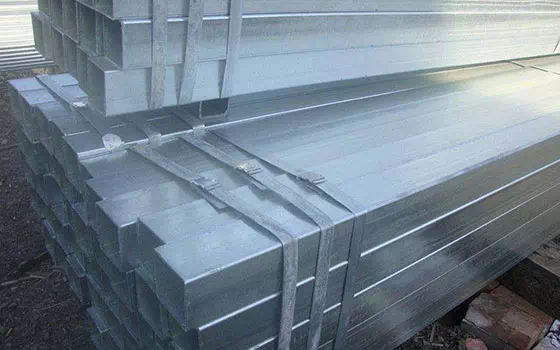
However, galvanized steel is an exception, it is not attracted to magnets. The reason is that during the galvanizing process, the surface of the originally magnetic steel is coated with a layer of zinc, and iron atoms are combined with zinc atoms to form an alloy, which changes the magnetic properties of the steel and makes it lose its original magnetism. In addition, the physical properties of galvanized steel have also undergone some changes, such as its resistivity will increase and its heat conductivity will decrease. Therefore, although galvanized steel has a wide range of applications in the manufacturing industry, because it is not magnetic, it is not suitable for use as a magnet material.
In summary, although magnets can attract many types of metal, for galvanized steel that has been galvanized, magnets can do nothing. This phenomenon reveals the importance of a material's physical and chemical properties for its interaction with magnets.
Whether galvanized steel has magnetism depends on its substrate material and subsequent treatment process, which can be divided into the following situations:
First, the magnetic properties of ordinary carbon steel after galvanized
The substrate itself is magnetic
Ordinary carbon steel (such as Q235, Q345, etc.) itself is a ferromagnetic material, and in the case of no special treatment, even if the surface is galvanized, it will retain magnetism. For example, if galvanized screws are made of carbon steel, they will still be absorbed by magnets after galvanized.
Limitations of application scenarios
If galvanized steel is used in magnetically sensitive scenarios, such as subway signal systems and high-speed railway cable bushings, the residual magnetism may interfere with device operation. Therefore, demagnetization must be performed.
Two, degaussing treatment of non-magnetic galvanized steel
Demagnetization process
Temporary demagnetization: By winding the coil and running an alternating current, gradually reducing the voltage to eliminate magnetism, suitable for short-term needs.
Heat treatment method: diffusion annealing at 500~550℃ to destroy magnetic tissue (such as martensite) and achieve long-term demagnetization effect.
Direct current demagnetization: The remanent magnetic field of the steel pipe is offset by the reverse magnetic field. The magnetic field direction and strength are measured with a magnetometer.
Performance characteristics
The galvanized steel after demagnetization has very low magnetic properties (the weak magnetic standard is 0.1~0.3MT MHZ), which can avoid the adsorption of iron filings when the cable is energized, and the surface iron filings are easy to fall off under high pressure, preventing the safety risks caused by the accumulation of magnetization.
Third, the magnetism of galvanized stainless steel substrate
The weak magnetism of stainless steel
Stainless steel (such as 304 material) itself is weakly magnetic, and may still show weak magnetism after galvanizing, but it is much lower than carbon steel. If no magnetic field is required, additional degaussing treatment is required.
Application limitation
Stainless steel galvanized screws due to poor adhesion to the coating, easy to peel or expose white, so the project is more inclined to use degaussing carbon steel galvanized pipe.
4. Practical engineering application
Typical product
Non-magnetic galvanized steel pipe: used for subway and high-speed rail cable bushing to avoid signal interference.
Degaussing wire pipe: the specifications are usually DN20-DN350, commonly used DN80, DN100, etc., and the durability is guaranteed by hot-dip galvanizing anticorrosion + degaussing process.
Type | Magnetic performance | Application scenario |
| Ordinary carbon steel galvanizing | Retention magnetism | General building, structural parts |
| Degaussing carbon steel galvanized pipe | Weak magnetic or no magnetic | Subway, high-speed rail, civil air defense engineering signal system |
| Stainless steel galvanized (untreated) | Weak magnetism | Special anti-corrosion requirements scenarios (magnetic effects to be assessed) |
Sales hotline:
 Scan and consult wechat customer service